

This overview explains how maintaining the right plant room temperature conditions supports consistent performance, reliability, and long-term value.
At Cattani, we understand that plant room temperature is not a minor installation detail. It is an important part of maintaining the operating conditions for which dental compressors and suction systems are designed. Like any precision mechanical equipment, these systems perform best when temperatures remain within an appropriate range. For authorised service technicians, identifying environmental conditions early helps support reliable operation over time. For dental clinic owners, it is one of the easiest ways to protect essential equipment and maximise long-term return on their plant room investment.
When plant room conditions move beyond the recommended range, the effects are seldom isolated. Elevated temperatures can place additional stress on components, reduce system efficiency, and shorten maintenance intervals over time. If it is too cold, the dental clinic may experience equipment that does not perform as intended. This often means service technicians are called on more reactively, with fewer opportunities to support clinics through proactive maintenance. Much like a car engine is designed to operate within a normal temperature band and relies on its radiator to help keep it there, dental plant equipment performs best when the surrounding environment supports its ideal operating range. The issue is not the equipment itself, but sustained operation in conditions beyond what any precision system is designed to handle. This is why Cattani places such strong emphasis on correct plant room conditions as part of a long-term performance strategy.
Service Technicians See Warning Signs Early
Technicians are often the first to spot when temperature is affecting plant room performance. There are two ends of the spectrum for plant room equipment that define the ideal operating range, with upper and lower limits. Depending on whether the plant room is too hot or too cold, certain common warning signs will appear.
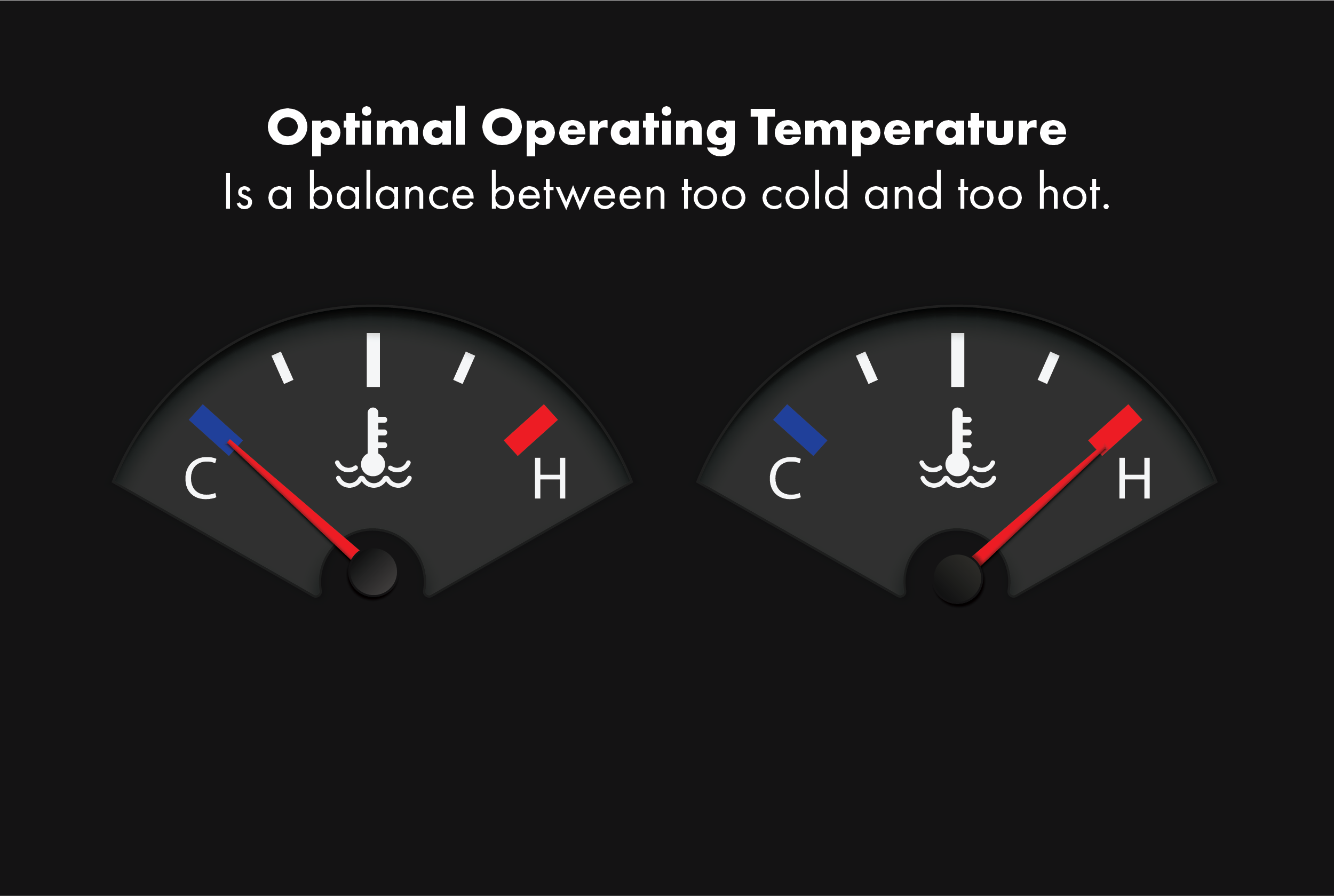
High Temperatures – May result in longer operating times, hot ambient air in the plant room, increased moisture, unusual noises, and shorter service intervals. These are not isolated symptoms; they are often signs that the plant room environment is placing an unnecessary load on the equipment. Service technicians note that temperatures above the recommended operating range can reduce the effectiveness of the air-drying system. During their routine After Care check, they review cooling fans, room temperature, and any evidence of excess moisture.
For oil-free compressor systems (medical devices) in particular, maintaining suitable ambient conditions is especially important because there is no lubricating oil to buffer friction as in conventional industrial compressor systems. As temperatures rise, metal components expand, clearances between moving parts can change, and wear may increase over time. In practical terms, a hot plant room can influence reliability and the condition of bearings, seals, and electrical components if conditions remain outside the intended range for extended periods.
Low Temperatures – On the other hand, when the plantroom is too cold, a separate set of issues is often seen. A suction system exposed to near-freezing temperatures may cause any residual fluid to freeze within separators, suction lines, or sewer drain lines, which can block the lines or crack components as the ice expands.
O-rings and rubber seals may become brittle and less effective, leading to leaks. Metal components can contract, altering manufacturing tolerances. In the worst case, this may cause friction or components to bind.
What High-Performing Clinic Owners Know
Clinic owners do not need to become plant room specialists, but they do need confidence that their essential systems are supported by the right environment. Compressors and suction units are mission-critical assets. If they are installed in a room operating outside the ideal temperature or humidity range, the clinic may face avoidable interruptions, reduced equipment lifespan, and performance issues that affect patient flow, staff productivity, and the overall cost of ownership.
A well-managed plant room helps protect a clinic’s investment in several ways:
- It helps minimise unnecessary thermal and moisture-related stress on compressors and suction equipment.
- It helps maintain dry, stable compressed air across the practice.
- It supports equipment reliability, efficiency, and service life.
- It lowers the likelihood of urgent callouts and workflow disruption.
- It provides technicians with a better environment for properly servicing and maintaining the equipment.
The Technician’s Role in Protecting Performance
Service technicians do more than restore equipment to working order. They help clinics maintain the conditions that support consistent performance. That means looking beyond the machine itself and assessing the surrounding plant conditions: airflow direction, extraction effectiveness, seasonal ambient changes, intake air quality, room clearance, and whether the space is genuinely suited to the installed equipment.
This is where technical expertise becomes measurable business value. When a technician recommends improved ventilation, dedicated air conditioning, correctly sized pipework, or a review of plant room layout, that advice can help owners avoid preventable wear and future costs. Cattani has long maintained that dedicated air conditioning is the superior method for stable temperature and humidity control in a dental plant room, while fan ventilation must be carefully assessed, as not all systems are suitable, and seasonal conditions can materially affect results.
Supporting the Ideal Operating Range
Both ventilation strategies have a place, but they do not deliver the same level of control. Fan ventilation can be effective when properly designed, with cooler intake air entering at a low level and warmer air extracted at a ceiling height, but actual results depend on room size, equipment heat load, incoming air temperature, and humidity. Air conditioning provides more consistent control over both temperature and moisture, particularly in warmer climates or enclosed plant rooms. It is important to note that premises-wide air conditioning is insufficient for plant areas, and dedicated plant-room air conditioning should be used where stable conditions are required. Like any mechanical system, dental plant equipment has a recommended operating range, so the goal is not to focus on extremes, but to maintain conditions comfortably within that range.
A Better Outcome for Clinics
When technicians and clinic owners are aligned on plant room conditions, the benefits are immediate and long-term. Technicians can work more proactively, identify issues earlier, and support a more predictable maintenance schedule. Clinic owners achieve more consistent performance, reduced risk of downtime, and stronger returns on their equipment investment. The outcome is not simply fewer faults. It is a clinic that operates with greater consistency, resilience, and confidence.
Temperature control is a core part of best practice plant design, effective servicing, and responsible business management. It represents one of the clearest opportunities for service technicians to add value beyond the repair itself. For clinic owners, it is one of the best ways to support reliability, manage maintenance costs, and keep the practice running smoothly.
Careful planning and monitoring help ensure that small issues are corrected before they place unnecessary stress on the system. Review and improve your plant room’s temperature control before it places unnecessary stress on the system.
If you are planning a new plant room, upgrading an existing space, or reviewing performance issues, speak with trained technicians from the Authorised Cattani dealer network. Their expertise can help you plan a more effective plant room environment, support reliable equipment performance, and make more informed long-term decisions.